
Jacksonville Beach Address History Sources
Previous residents appear in sources made for different purposes. The current parcel record is the safest starting point because its RE number and legal description can survive a renamed road. Deeds identify buyers and sellers. Directories and census schedules can name people at the address, while permits describe the building timeline. Newspapers and probate files often explain why a household disappears from the next dated source.
| Source | Years It Covers | Where Held | What It Shows |
|---|---|---|---|
| Clerk Acclaim | 1988-present online; older by counter or mail | Duval Clerk | Recorded ownership chain and images |
| PAO sales | Parcel dependent; sample reaches 1972 | Property Appraiser | Dates, prices, and book/page bridges |
| JPL directories | Digitized 1876-1925 | Jacksonville Public Library | Dated names, spouses, work, and addresses |
| Federal census | Decennial through 1950 | NARA and library databases | Household members at a dated place |
| COAST permits | Historical; exact start unlocated | Jacksonville Beach | Permit and inspection timeline |
| Newspapers | Beaches Leader 1963-present; Times-Union 1883-present | JPL databases | Obituaries, notices, transfers, and addresses |
Start with PAO and deeds for title. Shift to directories and census records when the question is who lived there, not just who owned it. Jacksonville Beach previous residents from the late twentieth century may also appear in Beaches Leader notices and city permits.
The JPL Special Collections page introduces the local newspaper and ledger resources used to extend an address trail.
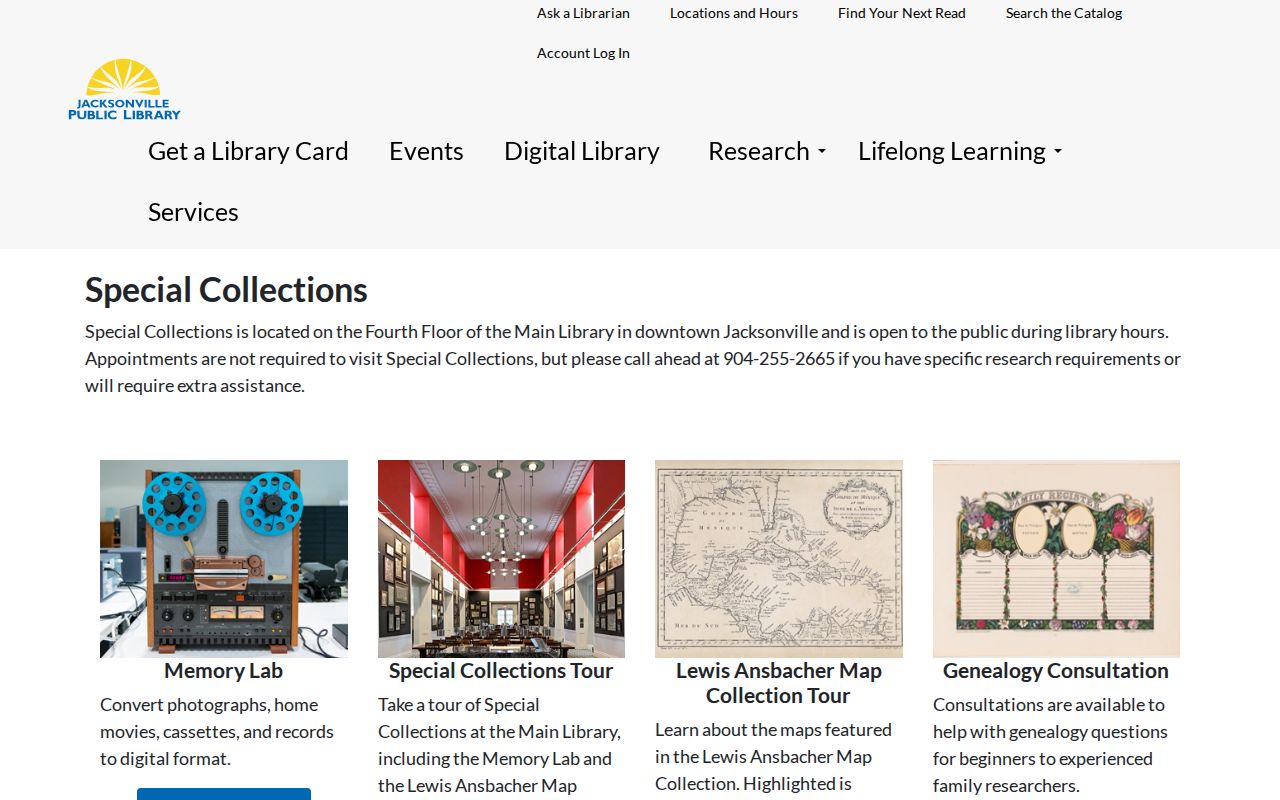
Those collections provide dated context after the parcel and deed identity has been fixed.
Trace Jacksonville Beach Deed Owners
The backward deed chain starts with today's parcel, not a remembered surname. Search the address in the Duval Property Appraiser, then copy the RE number and full lot, block, and subdivision description. The newest sale book and page should lead to the purchase deed. Confirm that the deed carries the same legal land before accepting its parties.
- Record the current owner, RE number, and legal description from PAO.
- Open the newest sale reference in the Acclaim index.
- Copy buyer, seller, date, instrument, and book/page from the deed.
- Search the seller as a prior grantee, then repeat while the parcel identity matches.
- At the 1988 online cutoff, take book/page and party clues to Room 1253 or submit a mail request.
- Grantor / grantee
- The grantor gives an interest; the grantee receives it.
- Chain of title
- The linked series of recorded transfers for the same land.
- Legal description
- The lot, block, subdivision, or boundary identity that outlasts a street label.
The PAO sample history reaches 1972 even though Clerk images begin in 1988. That contrast makes PAO book/page references a useful bridge, not a substitute for the deed. For instruments dated January 1 through 20, 2004, a corrected number may have lost an extra zero. Search by party or book/page when an expected number fails.
The Duval Clerk fee schedule explains copy and certification charges.
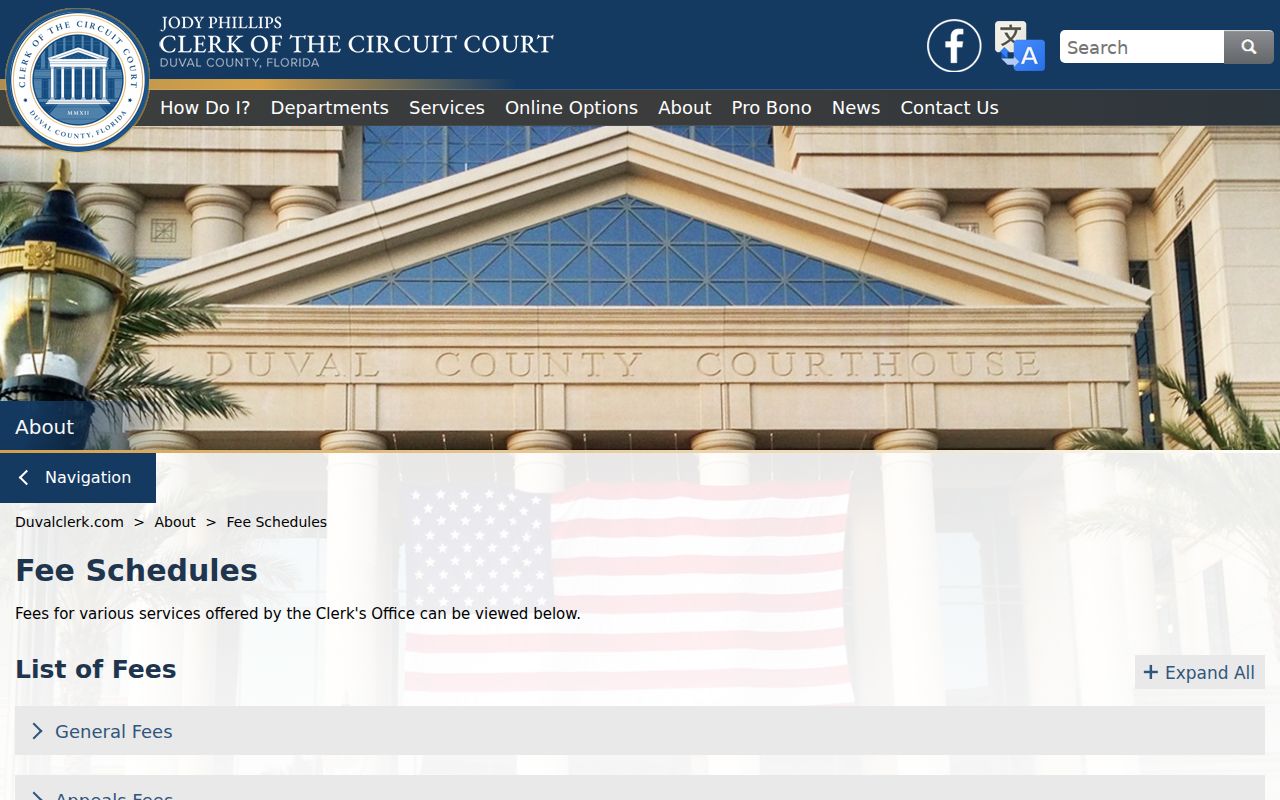
The schedule helps distinguish a free index view from an office copy or certified record.
Jacksonville Beach Address Aliases
Historic names can break a simple address search. The settlement was Ruby, became Pablo Beach in 1886, and took the Jacksonville Beach name in 1925. Pablo Avenue was formerly Ocean Avenue. Try each place and road name in directories, deeds, and newspapers, then use the legal description to decide whether two strings point to the same land.
South Beach was largely unimproved until a 1985 redevelopment effort and 1987 plan. If a house or street is missing from an early directory or Sanborn sheet, it may not have existed. The 1890 Murray Hall hotel and depot fire is local history, but no official source ties it to lost county records.
Jacksonville Beach Building Records
Ownership changes do not reveal when a structure was built, enlarged, or repaired. COAST, the city Customer Online Application Search Tool, reports historical permits, inspection status, plan-review status, and outstanding permit fees. It is free and needs no login. Copies come from the City Clerk, and a specific Chapter 119 request is the fallback when the live query does not surface the needed file.
The address assignment record can link the owner of record, current address, parcel ID, survey or legal description, proposed use, and site plan. Pair its date with PAO building facts and recorded deeds. A permit applicant has a dated role, though that person is not automatically an owner or occupant.
Jacksonville Beach Family Event Clues
Vital records can confirm a family event after a likely identity has been established. Florida does not publish a general birth or death people index. Births remain confidential until 125 years old, and cause of death is restricted for 50 years. Marriage abstracts from June 6, 1927 forward are generally public through the state, while Duval files cover local licenses and recent records.
The Florida birth certificate page shows identity and eligibility rules.
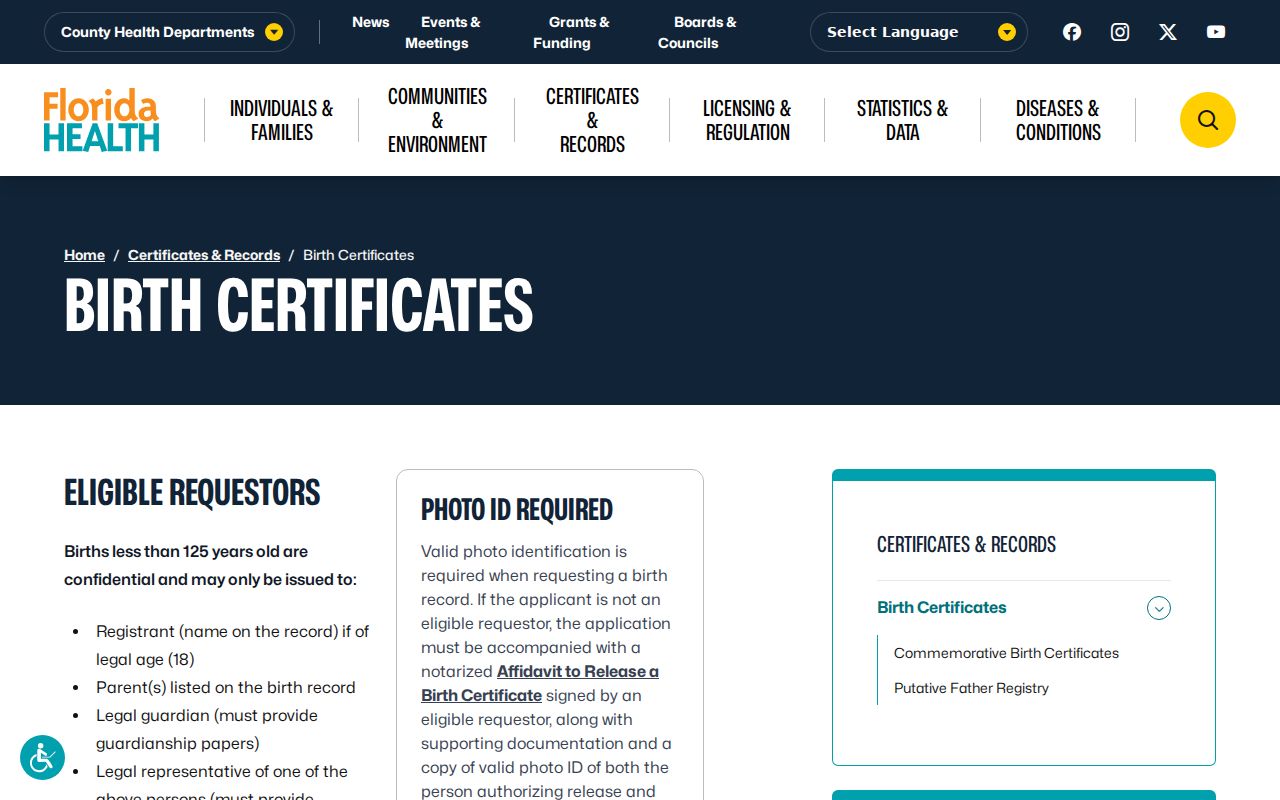
The application is a confirmation route, not an open address directory.
The Florida death certificate page explains the public and restricted portions.
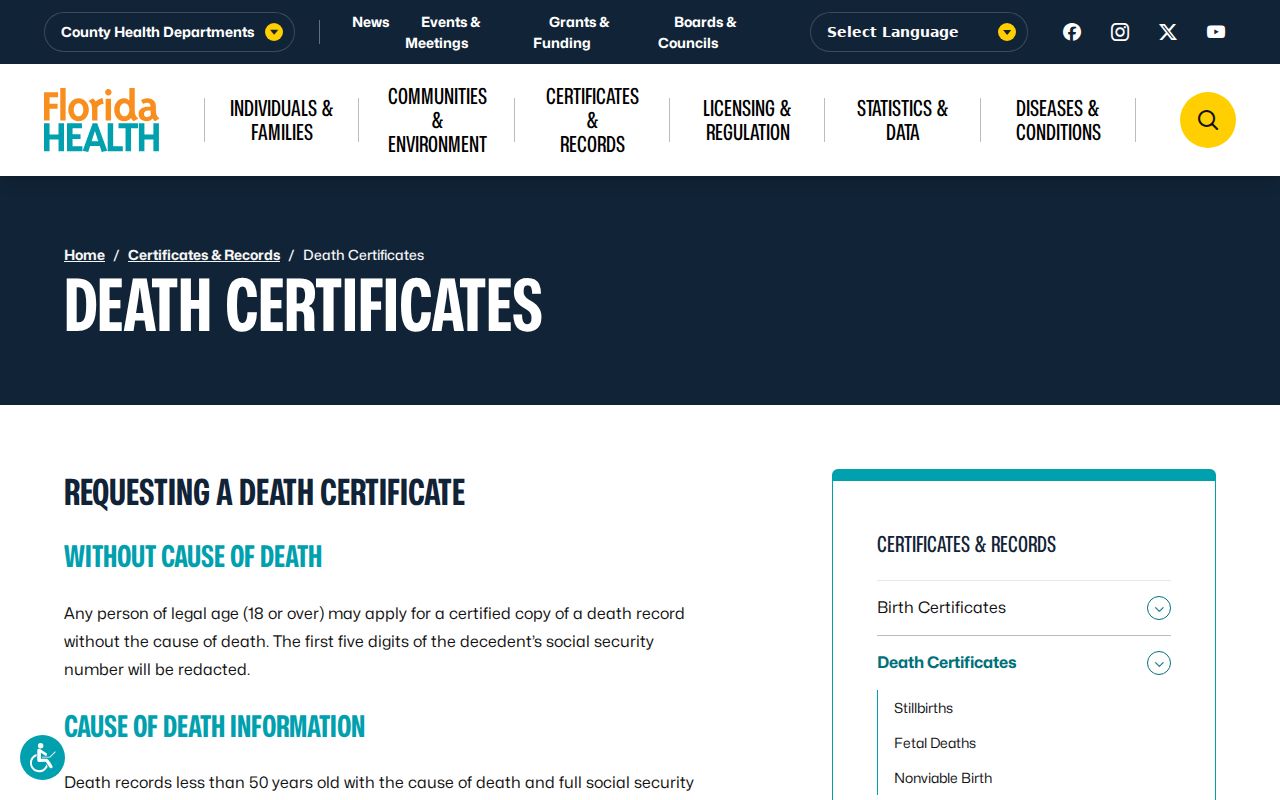
A death record may close a household trail, but eligibility still governs protected detail.
Jacksonville Beach Past Household Trail
Owners are only part of the story. JPL's 23 digitized volumes run from 1876 through 1925, but their metadata does not prove full Pablo Beach coverage. Check each scan before claiming an entry. A 1905 street guide sorts locations by block and number, marks intersections and corner occupants, and notes vacant sites. It can work like an early reverse directory.
For each directory hit, copy the exact name, spouse, work, address, and date. Then compare the closest census that is public under the 72-year rule. The census can add family or other household members. Use adjacent directory years to see whether a name persists between census dates. Full collection details belong on the Jacksonville Beach city directory page.
- Fix the legal parcel and all known address aliases.
- Search the street guide and surname pages for the same publication year.
- Compare adjacent years and note every spelling or status change.
- Find the closest census through 1950 and verify the street and household.
- Extend the trail with Beaches Leader, Times-Union, deeds, and probate.
Obituaries and probate can identify heirs, prior addresses, or a reason the household changed. A CORE probate docket is procedural evidence, not proof that every allegation in a filing is true. If a lawful file is not online, the Duval Clerk counter or mail request remains available.
A gap between sources needs a cautious explanation. A renter may never appear in the deed chain. A household can fall between census years, escape a directory canvass, or use Pablo Beach when a catalog expects Jacksonville Beach. Newer South Beach streets may not exist in early volumes. Check spelling variants, spouse names, occupations, nearby years, and the Beaches Leader before concluding that one household replaced another on a precise date.
For a lawful file missing online, carry party names, date range, legal description, and book/page clues to the custodian. The Duval Clerk handles older instruments and probate files; Jacksonville Beach handles city permits. Ask for an existing record, not a newly compiled roll of everyone who once lived there.
Lawful use. Research Jacksonville Beach previous residents for house or family history. Never use an address trail to track, threaten, or harass a living person.
Document Jacksonville Beach Previous Residents
Write each conclusion as a dated source statement. A person can be a grantee in a deed, an assessed owner in a parcel roll, a resident in a directory, or a household member in a census. Those roles are not interchangeable. Save the record date, publication year, exact name, address text, legal description, and image or book/page citation. If the tax mailing and situs differ, record both without treating either as proof of where the owner lived.
Gaps often have ordinary causes. Renters may never enter the deed chain. A directory canvass can omit a household, and the census only supplies a ten-year snapshot. OCR can miss a faint surname. Search spouse names, occupations, spelling variants, nearby years, and the block's street guide. Try Ruby, Pablo Beach, and Jacksonville Beach as place terms, plus Ocean Avenue when a later record says Pablo Avenue. A newer South Beach street may be absent because it was built after the early directory era.
When an online chain reaches 1988, carry its oldest book/page reference to the Duval Clerk rather than guessing the prior owner. PAO sales may bridge farther back for some parcels, as the inspected public sample reaches 1972, but coverage varies by parcel. A mail request should include party names, an approximate date range, and a self-addressed stamped envelope. Jacksonville Beach permit copies belong with the City Clerk, while probate and full court files belong with the county Clerk. This separation keeps a house history tied to the office that created each fact.
Newspapers can explain transitions the formal chain does not. Search Beaches Leader after 1963 for obituaries, legal notices, and address references, then compare Times-Union files for wider county context. A notice can suggest heirs or an earlier address, but verify the relationship in probate or deeds.