
Jacksonville Beach Directory Collections
The best online starting point is the Jacksonville Public Library digitized directory collection. It has 23 verified volumes with page scans and searchable text. These are Jacksonville-area books, so each volume must be checked before claiming that it covers Pablo Beach or Jacksonville Beach.
| Collection | Years represented | Where held | Access |
|---|---|---|---|
| Webb, Vance, and Polk scans | 23 volumes, 1876-1925 | Jacksonville Public Library | Free scans and OCR online |
| Florida city directories | Early 1900s-present statewide overall | State Library of Florida | On-site or reference request |
| Jacksonville microfilm | 20 reels, including 1902-1912 titles | FamilySearch | Catalog and library access |
| Federal census | Public through 1950 | National Archives | NARA and partner access |
No official source establishes a complete beach-city shelf run, a last printed year, or a Jacksonville Beach-only reverse directory set. Treat a catalog hit as a route to evidence, not proof that every local household appears. Search the scans, note missing years, and ask a reference librarian about shelf material not described online.
Companion sources extend the directory trail. Jacksonville Public Library newspapers include the Times-Union from 1883 to today, the Journal from 1901 to 1988, and the Beaches Leader from 1963 to today. Sanborn map access spans 1867-1970 nationally, though beach coverage was not proved. These sources can explain an occupation, a move, a death, or a street that changed after the printed book was issued.
Twenty-Three Jacksonville Beach Directory Volumes
Webb editions cover 1876-77, 1878-79, 1882, 1887, 1889, 1891, 1893, 1896, and 1897. Vance published a combined Jacksonville and St. Augustine book for 1895 and another volume in 1899. Polk accounts for 1904, 1905, each year from 1916 through 1924, and a 1925 Jacksonville and South Jacksonville edition. That exact run is useful, but it is not a promise of complete beach coverage.
The digital directory viewer shows how scans and text search work.
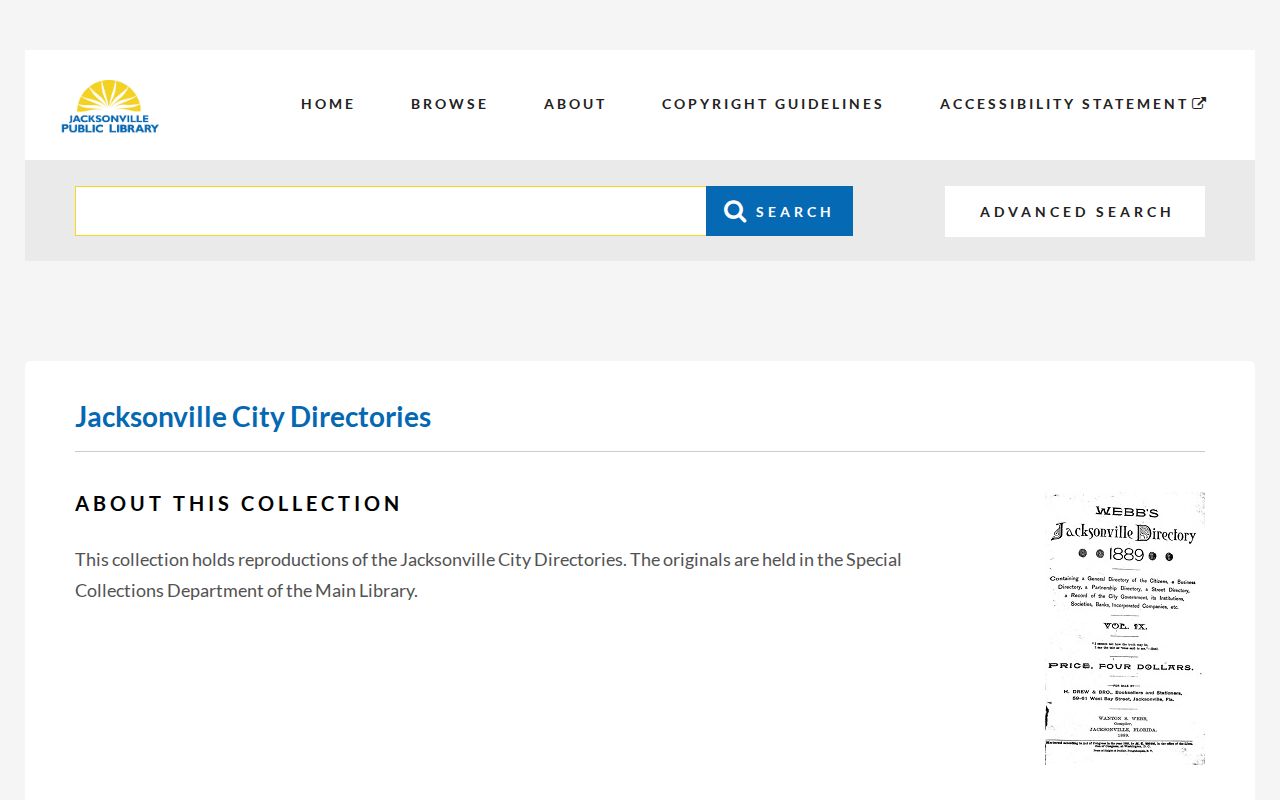
Optical character recognition can misread faded type. Try initials, a spouse, an occupation, and spelling variants, then browse nearby pages after a weak result.
Jacksonville Beach Directory Publishers
Publisher and year belong in every citation. A Webb page, Vance volume, and Polk listing represent distinct parts of the run. Save the publisher, edition year, page, and digital item number with the entry. Those details keep same-name residents apart and let another researcher return to the same evidence.
Metadata proves that a volume exists, not that the beach was fully canvassed. A resident could be listed under a business, an older place name, or a Jacksonville heading. Some people were simply missed. State the result shown on the page instead of extending it beyond the source.
Reading Jacksonville Beach Directory Entries
An inspected 1922 Polk page shows the compact form used in these books. Entries combine surname, given name or initial, spouse, work, and address. Read the edition's key before expanding any mark.
| Name | Surname, given name, and sometimes a middle initial |
|---|---|
| Spouse | A spouse may appear in parentheses |
| Work | Occupation and sometimes an employer |
| Residence |
h for householder or home and r for resides or roomer |
| Family status |
wid identifies a widow and may name the deceased spouse |
- Criss-cross directory
- A later directory arranged by address rather than surname.
- Householder index
- A list centered on the person responsible for a household, which can omit other occupants.
- Abbreviation key
- The publisher's list explaining short forms and symbols in that edition.
The 1922 Polk sample page gives a real view of the type and marks.
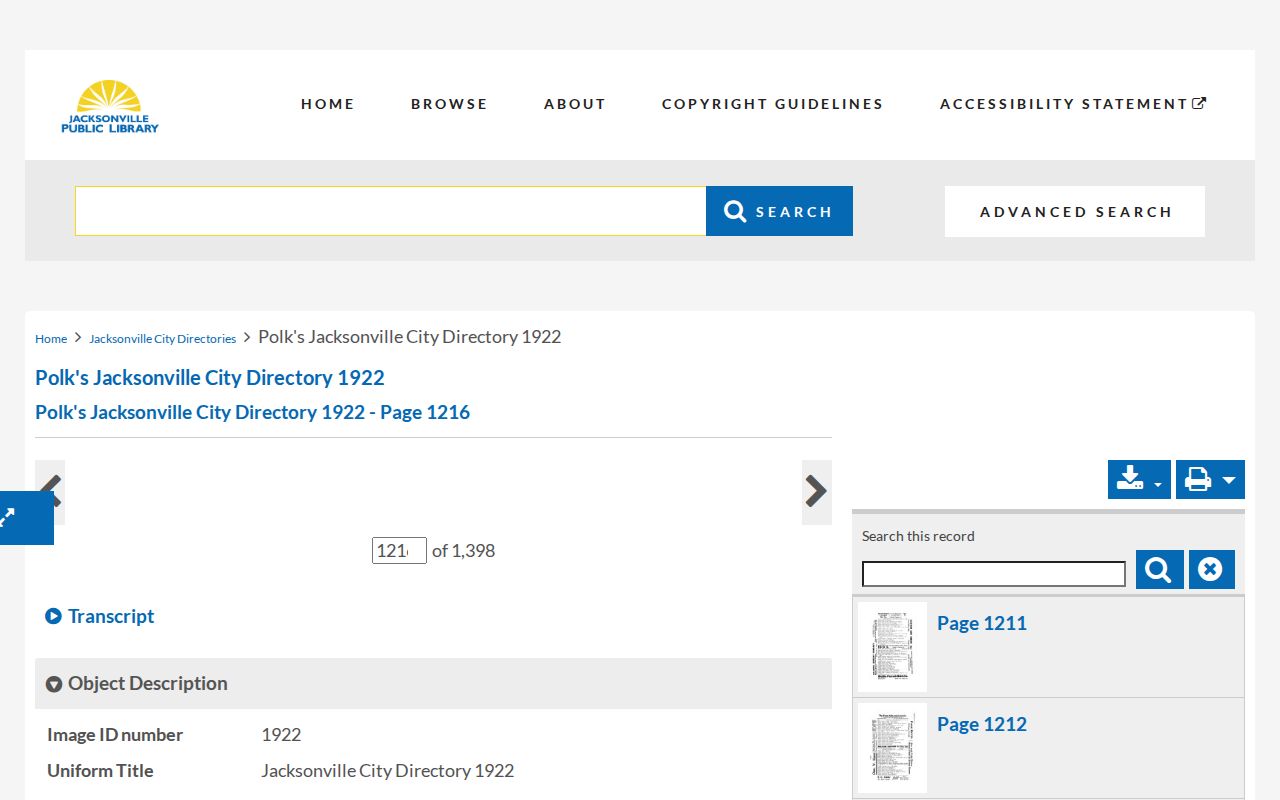
Common forms include elk for clerk, lab for laborer, and pntr for painter. Copy the original text before interpreting it.
Context in Jacksonville Beach Directories
Polk used asterisks to identify Black residents in this segregated-era publication. The mark reflects discriminatory publishing practice, not a neutral household fact. A transcription should explain the historical convention and should not repeat that classification as a present-day judgment.
Directories also undercounted children, boarders, people missed by canvassers, and residents not recognized as household heads. One listing is a dated clue. Census schedules, newspapers, deeds, and probate records can add people whom a city directory omitted.
Jacksonville Beach Reverse Directory
The 1905 street guide acts as a reverse-search tool from before modern criss-cross books. Roads appear by block or house number. The guide notes intersecting streets, corner occupants, and vacant sites. Start with a road when the surname is unknown, then return to the alphabetical list for the full entry.
Beach addresses need extra care. Ocean Avenue was an earlier name for Pablo Avenue. Newer South Beach subdivisions grew after the mid-1980s, so absence from an old guide can mean the road did not exist. The Jacksonville Beach street directory covers modern parcels and addresses.
Ruby in Jacksonville Beach Directories
Rail-era lots were sold as Ruby in 1884. Ruby became Pablo Beach in 1886. The town incorporated in 1907 and adopted Jacksonville Beach in 1925. Search all three names in city directories, catalogs, newspapers, and map indexes.
| Year | Local name or event |
|---|---|
| 1884 | Ruby lots sold |
| 1886 | Ruby renamed Pablo Beach |
| 1907 | Pablo Beach incorporated |
| 1925 | Jacksonville Beach name adopted |
The 1890 Murray Hall hotel and depot fire is local history, but no official evidence links it to lost county records. It should not be described as a courthouse records loss.
Jacksonville Beach Directory Research Desks
The Jacksonville Public Library Genealogy Collection, at 303 N Laura Street, offers staff consultations, FamilySearch Affiliate computers, in-library Ancestry, remote HeritageQuest, Duval probate material, and more than 2,000 family and county histories. Special Collections adds 372 municipal ledgers from the 1870s through the 1960s and about 130,000 Times-Union files.
The State Library directory service provides a second route.
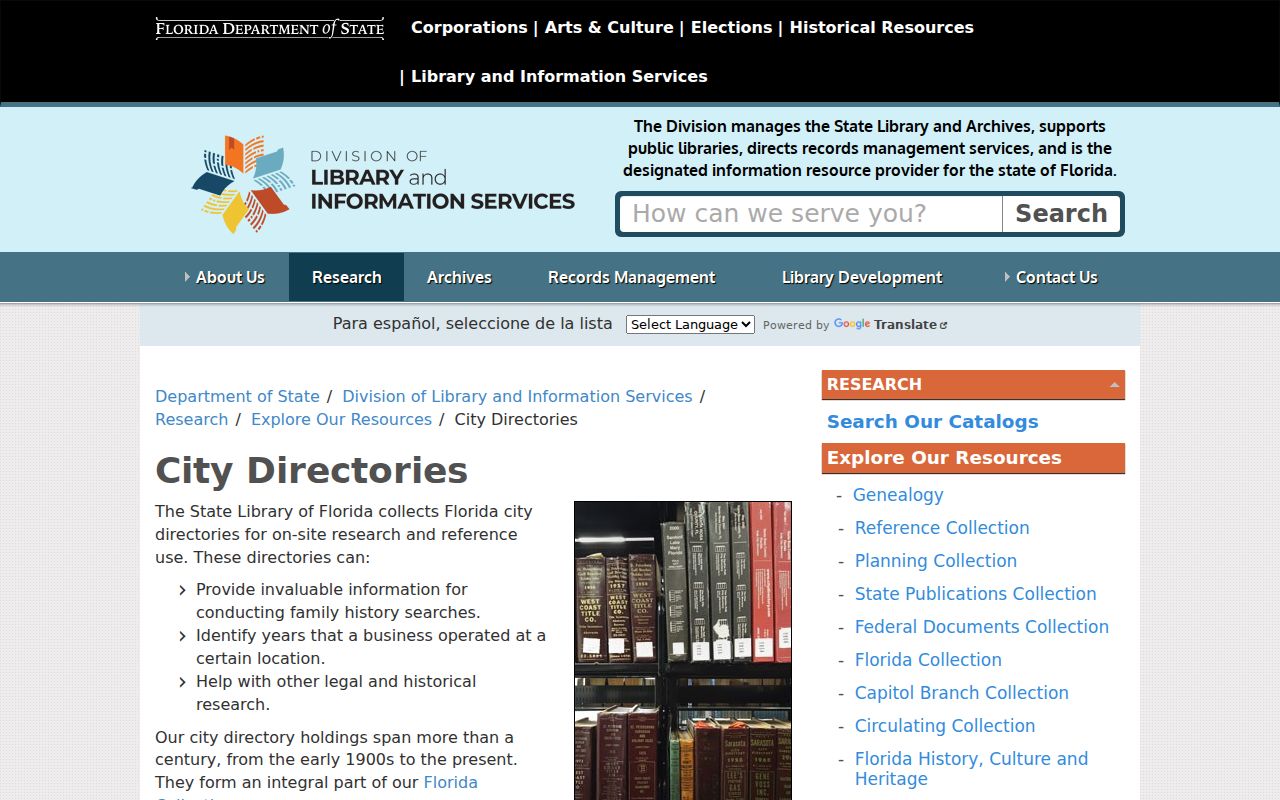
Its statewide collection reaches from the early 1900s to the present overall. The exact Jacksonville shelf years require a reference request at 850-245-6682.
Trace Jacksonville Beach Directory Families
A sound city directory search follows one person through several editions, then tests the pattern with another source. Initials, spouse names, occupations, and street numbers help separate people who share a surname.
- Copy the surname entry, spouse, work, address, and each abbreviation.
- Check the street guide for the block, nearby roads, corner occupants, and vacant lots.
- Move through adjacent years, noting the first and last appearance and each move.
- Pair the trail with the nearest public census. The National Archives census overview explains the 72-year release rule.
- Use the Beaches Leader from 1963, the Times-Union from 1883, deeds, and probate to explain a gap.
The federal census can reveal who shared the household.
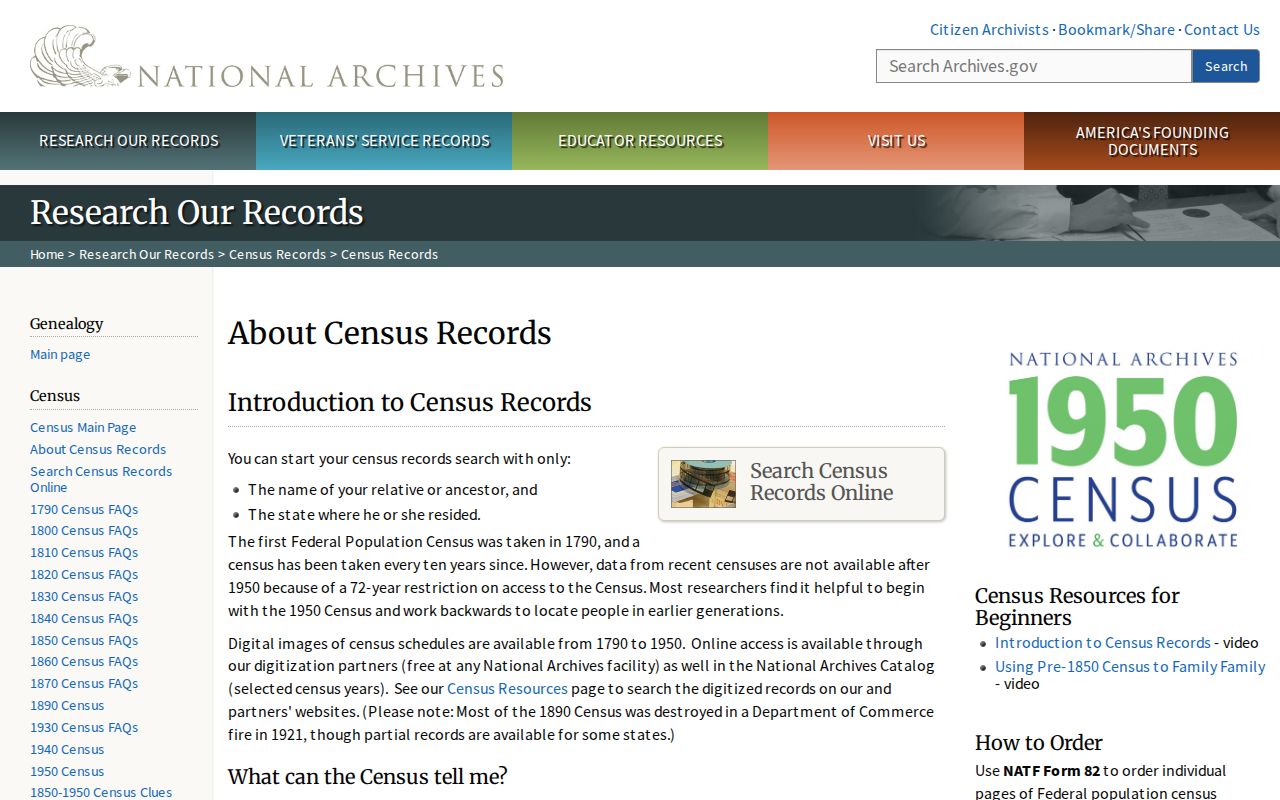
A missing name can mean a move or death. It may also reflect an omission, an unlisted resident, a late-built street, or the Pablo Beach naming issue. A second record must support the explanation.
Keep a research log by edition. Write down every spelling tried, the page range checked, and whether the street guide was consulted. A clear negative search is useful when the next step is a librarian request, a newspaper search, or a deed and probate check.
Extend a Jacksonville Beach Directory Trail
One city directory entry should lead to a chain of dated checks. Begin with the surname pages and copy the printed spelling, middle initial, spouse, occupation, employer, address, locality, and abbreviations. Move to the street guide in the same volume to see the block, intersections, corner entries, and vacant sites. Then inspect the prior and next available years. A change from r to h, a new spouse notation, or a different occupation can help distinguish two people who share a name.
Place the result beside the closest public census through 1950. A census can identify household members who were omitted from the directory and may give ages, relationships, birthplaces, or work details. It is only a decennial snapshot, so fill the years between with directories, deeds, probate, and newspapers. The Beaches Leader is the strongest beach-specific newspaper route from 1963 onward, while Times-Union files reach 1883. Jacksonville Public Library's Genealogy Collection also provides staff consultations, FamilySearch Affiliate computers, in-library Ancestry, remote HeritageQuest, Duval probate material, and more than 2,000 family and county histories.
Absence needs context. A canvasser may have missed the person, OCR may have misread the name, or the entry may sit under Ruby or Pablo Beach. South Beach addresses developed after the mid-1980s will not appear in nineteenth-century volumes. Sanborn map databases can add building context, but the inspected catalog does not prove beach coverage for every listed Jacksonville edition. Record the negative search and the precise volume checked instead of turning it into a claim that the family was not present.
The State Library is a useful fallback when the digital run has a gap. Its statewide collection reaches from the early twentieth century to the present overall, but the exact Jacksonville shelf run was not published in the inspected source. Ask reference staff at 850-245-6682 about a named year and locality. FamilySearch catalogs 20 Jacksonville directory reels, including identified Wiggins and Polk years. Compare catalog metadata before assuming those reels include Pablo Beach residents.
Keep the scan itself as the evidence. OCR is only a finding aid and can misread initials, street abbreviations, or worn type. Cite the volume, year, page, and image.